Followers

Sunday, March 6, 2016

Pictures Tell Stories--Faces in Photos

Most newborns learn to focus first on their mother's face. The human face is so important to us, we see faces even where there are none. My subconscious seems to bring them out of patterns in the carpet or the curtains or in light and shadow on a wall. It's fun to use the camera to capture some fanciful images, and even more satisfying to capture the emotions on the human face.
A face by the trail...
Look! It's a gnome!


A not-so-happy woodland creature
Faceless but happy in Arizona!

Disguised as a tree

Not a face, but a shadow-angel in the Grand Canyon
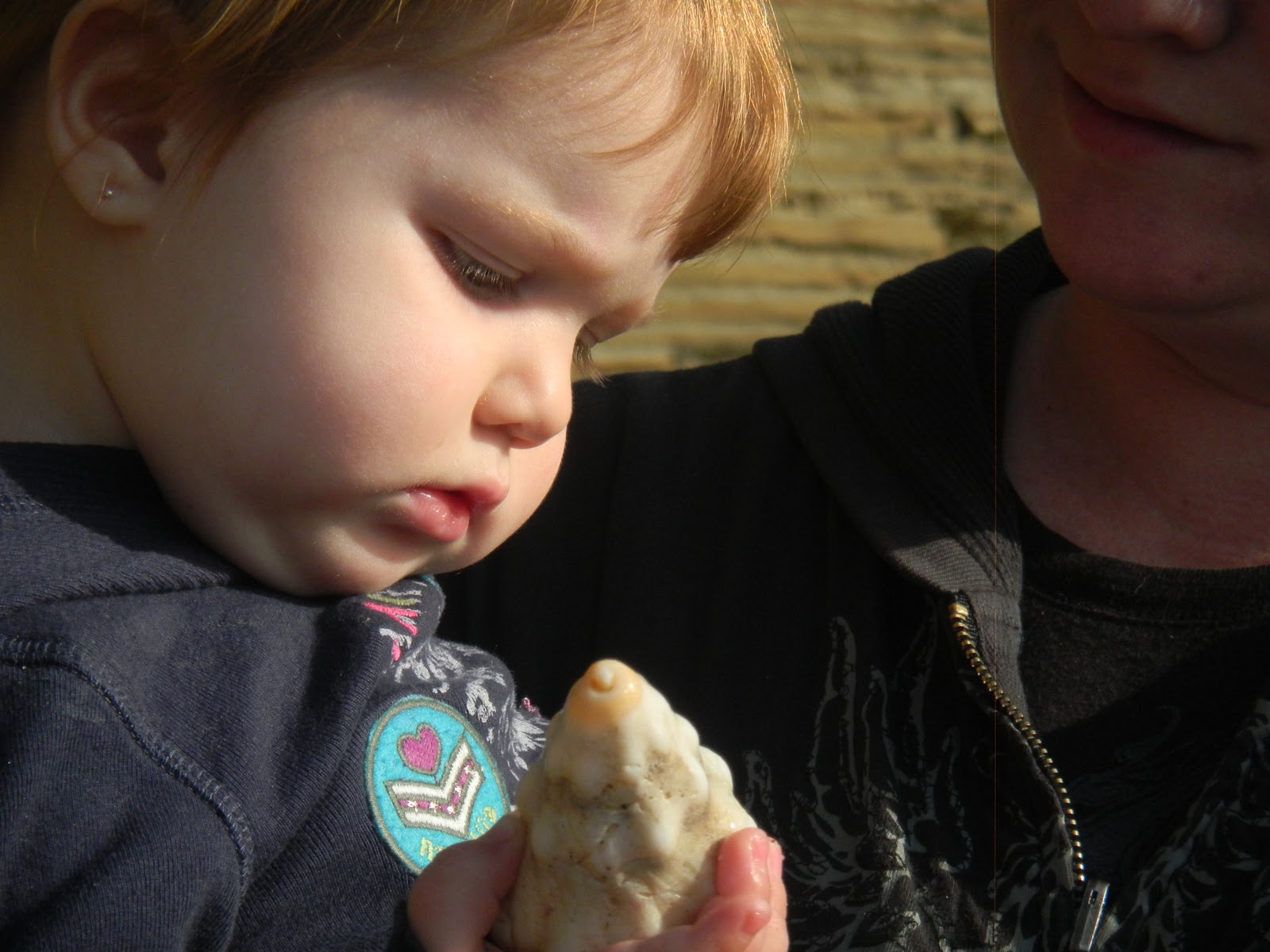
Real faces express wonder.
Or interest...

Or a lifetime of memories...
Or pride.


All it takes is being in the right place at the right time...every photographer's greatest joy.

Saturday, March 5, 2016

Your Photos Tell Stories, and the Story is in the Details


I'm an amateur photographer so I can't offer professional picture-taking advice. But I'm grateful to live at a time when camera technology is so simple, easy, and fun that only a few short years ago, professionals could only dream of the miracles our cameras today perform. In sharing these photos, I'd like to offer a few tips that might make photography more fun for you as well. 

The best pictures tell stories, and details tell the story best. Here's one technique that works especially well for travel pictures.

Take an over-all shot to establish place, mood, or occasion.

In this photo of San Xavier Mission Del Bac, near Tucson, Arizona, the people walking toward the gates seem to beckon us to follow. 


Follow the scene-setting shot with others that give more detail. Here is a closer shot of the interesting main entrance to the mission.


The weathered wood of the entry door caught my eye. How many worshipers have passed this way?


An overall shot of the complex interior of the sanctuary...


....followed by detailed vignettes inside the church.
This Station of the Cross relief in the courtyard gives a glimpse of the interior construction of the wall.


A series like this could be completed with any number of shots: perhaps an individual worshiper kneeling to light a candle, or the priest ministering to his flock, or a group of tourists listening intently to a guide.

My favorite shot shows the wrought iron gates opened out from the exit, indicating that the world awaits the ministry of those who've come to worship.

Try taking shots in series to draw your viewers in, whether you're traveling or just looking for stories wherever you are.


Saturday, February 20, 2016

Skiing With Caribou


Caribou on a frozen lake

I left Alaska long ago, yet it doesn’t take much to trigger memories of old friends and the adventures that were uniquely Alaskan. While going through a pile of musty notebooks recently, I came across some notes that brought to life one of those adventurous Alaskans.

Dean was a schoolteacher and pastor, a barrel-chested gnome of a man who loved the wilderness and could enthrall an audience with his storytelling.

One frigid night, Dean was skiing alone across Alaska’s beautiful frozen Lake Louise, three and a half hours from his home in Anchorage, headed to his son-in-law’s cabin on the opposite shore. A brilliant aurora played overhead, reflecting off the snow-covered ice. All was silent except for the whisper of his skis. His parka hood fell across his face as he pushed on, head down, enjoying the rhythm of skiing.

Suddenly, he became aware of odd clicking noises around him. He threw back his hood to find himself surrounded by a close-packed herd of caribou, moving past him in the same direction. They divided as they saw him and flowed past about twenty feet to either side. The clicking sounds came from their ankle tendons rolling past small bones in their feet. They carried their huge antlers high to avoid entangling them with those of their neighbors.

As Dean moved one way, then the other, the animals moved too, unafraid but keeping the same distance away from him. Dean skied along in the midst of the caribou until he saw the light from the cabin ahead. As he moved toward, the mass of beasts parted to let him through, then closed again.

From the shore, he looked back at the herd of caribou clicking on down the lake beneath the banners of color swirling in the sky. He hated to leave that wild and beautiful scene, but the warmth of the cabin beckoned. He turned toward the light in the window.

 Whenever I think of caribou, I remember Dean’s story as if I had been there myself.


photo credit: Harde de caribous en hiver / Herd of caribous in winter via photopin (license)

Thursday, February 11, 2016

Time Management--A Happier Way


    I just read an article in Reader’s Digest about the failings of time management, that icon of our American way of life.

    The author dared to say that as we slice and dice our day’s allotment of hours into smaller and smaller pieces, we become increasingly less satisfied as well as less efficient. For months now, it’s seemed like I’ve been flying down a mountainside on a sled propelled by urgency to hurry-and-do-and-make-lists-and-accomplish-t.h.i.n.g.s. But this simple statement knocked me off my sled. I fell into contemplation like a child tumbling into a soft, fluffy snow bank. I felt the sense of urgency loosen its grip.

    The moments of my day drifted by, as enjoyable as falling snowflakes. I prepared a good breakfast for my husband. We savored our time of Bible reading, prayer, and discussion. We talked about trusting Jesus enough to put the events of the day on hold in order to spend time with him. Sarah Young, in her book Jesus Calling, says that if we put communion with Jesus first, because he is omnipotent he will bend time and events in our favor, helping us accomplish more in less time.

    That proved true as I checked e-mails, brushed our cat and trimmed his toenails, and dusted and vacuumed the house, and tossed a load of clothes into the washer. Housekeeping can be an onerous chore, but as my mind followed the thoughts Jesus sent, the time flew past.

    I’d promised to fix a meal for a friend recovering from surgery, so I found a recipe online and began a baked stew while wondering what to fix for our lunch.

    All these activities were things I’d planned for the day.

    Then friends called, wanting to see our new house. I told them we’d love to see them. Hank came home from running errands. I put the stew in the oven to bake, fixed grilled cheese sandwiches, and we had lunch.

   The friends arrived. Because of their declining health, they brought with them very negative attitudes. Now that they can no longer carry on their lifelong busy schedules, they have trouble seeing their lives as worthwhile. As we listened, we made several positive responses that seemed to brighten their mood.

    Later, I finished fixing dinner and found the address of the friend who’d had surgery. We delivered the meal, came home, and ate our half of the baked stew.

    I addressed a mailer for one of my out-of-print young-adult books I wanted to send to a cousin. While Hank cleaned the kitchen, I skimmed the book again. I felt a little guilty. Time out to read wasn’t on my schedule, and boxes of books and papers in the office were still waiting to be unpacked, sorted, and put away. But then, as I skimmed, I realized the writing really was pretty good. That renewed my interest in turning it into an e-book. So was the time wasted?

    No, it was another example of the way the Lord gently nudges us into doing what is good for us and good for other people. He allowed the unscheduled visit of our friends so that we could encourage them and also to be aware of how many people around us need the attention that we can give. The steady but leisurely pace of the day left me feeling satisfied, not frustrated.

     And the things I did that weren’t on my schedule turned out to be the biggest blessings of all.

Wednesday, February 10, 2016

Mom Rescues My Valentine Dress


This post first appeared in Sun Breaks several years ago. It's one of my favorite Valentine stories.


When quality fabric was less expensive and ready-made clothing was much more costly than it is now, many women sewed for themselves and their families. My mother stitched clothing for her three daughters, two sons, our father and herself.

She taught her daughters the craft as well. Sewing didn’t come easily for me. I spent lots of time ripping out mistakes and starting over, but one mistake was so bad, I had no idea how to fix it.

I was a new teacher, and like other women teachers in those days, I wore dresses and skirts to school. My students, even the boys, seemed to appreciate my pretty clothes, most of which I’d made myself. One day I found a lovely soft piece of red corduroy printed with rows of tiny white hearts and flowers, perfect for the upcoming Valentine’s Day. I knew my fifth graders would enjoy seeing their teacher in something so appropriate.

I bought the cloth and took it to my parents’ home so I could use Mom’s new sewing machine. Carefully, I pinned the pattern pieces in place, cut them out, and began to sew. The top, with its softly draped collar, fitted perfectly. So did half of the flared skirt. I stitched the other half together. Oh, no! I had two half-skirts for the right side, none for the left. And no extra fabric.

Frustration welled. I’d wasted my hard-earned money and ruined my dress. I balled up the pieces and threw them into my mother’s rag bag.

A few days later, Mom stopped by my apartment with a gift...the Valentine dress, exactly as I’d envisioned it. Not until I inspected the reverse side of the fabric could I see how she had recut and fitted pieces together so skillfully the seams couldn’t be seen. The corduroy nap even ran in the right direction. What patience--and the designing skills of an engineer--it must have taken to accomplish that.

My students loved the dress, and so did I. Every time I wore it, I was  reminded again of my mother’s love.
Me in my Valentine's dress, on my 1962 honeymoon.


Saturday, December 19, 2015

Elegant Ornaments

Merry Christmas!
 
 Here at the Warm Beach Senior Community, our neighbors are truly young at heart. They fill their days with volunteering, service projects, and hobbies. 

    Lou Bosell, a former teacher, lives across the driveway from us. She welcomed me and some of our nearest neighbors to a Christmas tea in the cozy home she shared with her husband David until his death in 2005. Lou’s a busy woman. In her spare time she engages in fine needlework, an elegant pastime that is rare in these days of instant gratification.

    She has decorated her home for Christmas with sparkling white crocheted ornaments she’s made over a period of thirty years. Here’s her tree, covered with mostly three-dimensional art works, every one of them different, almost every one handmade.
  

  Lou’s siblings were twelve, eight, and seven when she was born, so she basically grew up in an adult community. Her mother was a skilled needlewoman. When at the age of seven, Lou lay abed with mumps, her mother helped her stave off boredom by handing her a three-piece dresser set and showing her how to embroider the design. Lou’s walls today are decorated with her intricate counted-cross-stitch pictures. At Christmas she hangs the mantle with cross-stitched stockings for each member of the family.

    At the age of seven or eight, she learned to sew by designing and sewing clothing for her dolls. Later she made clothing for her two sons. She began crocheting after she married.

    Her first crocheted ornaments were one-dimensional snowflakes, but then she saw a pattern book for balls and decided to try those. She usually uses size ten crochet thread and a number seven hook. She crochets the piece, then soaks it in fabric stiffener. While the ornament is still wet, Lou inserts a balloon inside and blows it up to the appropriate size. When the ball dries, she removes the balloon. Lou expanded on the original idea by hanging another lightweight ornament inside.
An ornament with a church inside

  She has a collection of balls with musical instruments inside. Her favorite holds a brass map of Nebraska, the state where Lou was born and raised. Another honors Seattle, with landmarks including the former Kingdome. She thinks it will be a special keepsake someday.

    Lou has two grandsons. She is making each his own collection of ornaments. One boy’s ornaments are crocheted; the other’s are counted cross-stitch.

    When Christmas is over, Lou wraps each ornament in tissue and stores it in a box with dividers. Family and friends will have to wait another long year to see her  beautifully crafted pieces again.
Lou made the treetop angel and the bells.

Lou's favorite, with Nebraska inside

Some snowflakes are backed with sheer fabric.

Caught in mid-twirl. Look closely to see the Space Needle and Kingdome.
Lou's handmade tree skirt.
A good place for mistletoe

A masterpiece of a centerpiece

Sunday, November 22, 2015

Lessons from a Hill of Ants


On these cold, rainy November days, the ants that were so much a part of our summer landscape are tucked away snugly in their nests. They worked hard gathering food for the winter, as King Solomon mentions in his collection of proverbs, and now they are enjoying the fruits of their labors.

In my recent post A Day on Orcas Island, I mentioned observing some wood ants. They reminded me of an incident from years ago when I was newly widowed and lived in a small RV with Sharon Dog, my red Irish setter. Part of my daily routine included taking Sharon to some nearby field or patch of woods where she could race away her abundant energy.

Near our RV park lay a tract of woodland earmarked for future development. Walking in those woods one fall day, Sharon and I came upon a hill of ants busy preparing for the winter ahead. The entire surface of the three-to-four-foot tall hill shimmered with millions of ants working together, each shiny black with a red-brown head and thorax. Along invisible trails from the woods, streams of ants carried fir needles or bits of twig to add to their hill. Some carried pieces of leaves overhead like little umbrellas or dragged insects larger than themselves to use as food. (I found out later they leave scent trails to help them find their way home.) Other ants scurried back along the same trails into the woods. 

 The entire hill seemed to be made of ants piled one on top of the other, but I didn't risk digging into it to find out if that was true. Though small, those ants looked unafraid of anything. Instead, I went to the Internet.

It looks like chaos, but every ant has a job to do.
Tiny Architects
 
 I found that wood ants often build their nests atop rotting stumps, which are easy to tunnel into. The nests, complex and wonderful constructions, are built to house hundreds of thousands of individuals. The core of each mound is covered with a deep layer of organic materials: evergreen needles, bits of twigs, dried grass, leaves, and pieces of moss and lichen. Somehow the ants know to lay the thatch in a way that intercepts the sun's rays at right angles. The thatch becomes a "solar panel," raising the temperature of the nest above that of the ambient air. This not only keeps the workers warm and active on cool days, but it also provides a warm, even temperature for the babies developing inside the nest. The thatch is also a waterproof "roof," with each needle and twig laid precisely to direct water off of and away from the nest.

Tending the Young

The center of the nest is deep underground, where workers have excavated a chamber. There, day in and day out, the queen ant goes about her business of laying eggs. The workers, all female, tend to the thousands of eggs and larva, moving them through the tunnels and chambers toward the surface or deeper into the nest to keep them at the right temperature for optimal development. They even bring them to the surface for a dose of sunshine if it is warm enough.

The Ants' Diet

Workers do more than build the nest and tend the queen and her brood. They bring in food. Ninety per cent of their diet comes from honeydew excreted by aphids. Aphids feed on plant juices, which are high in sugar. They excrete the excess sugar. Ants "milk" the aphids, collecting the honeydew in their abdomens, then return to the nest to regurgitate honeydew for the queen and other workers.
The developing larvae need protein in order to grow, so wood ants also feed on other insects such as caterpillars and beetles and even other ant species, and bring such prey in to feed the babies.

Cleanup and Security
 
Not only does feeding on other insects provide nutrition for the ant colony, but it helps cut down on the number of harmful insects in the environment. The ants keep the nest clean by carrying away dead workers and other debris. The workers also act as soldiers, defending the nest from predatory insects and other dangers. One type, Formica rufa, can spray formic acid at enemies up to several feet away.

 Most of our Northwest Washington nests are not this large.
After learning about all that marvelous organization and society, I wondered what would happen to the ant hill that Sharon Dog and I had seen on our walk. When we returned to the tract of former woodland that spring, we saw that the ant colony had been scraped off the surface of the earth, along with every bush, tree, and other living thing, right down to the bare gray mud. The acres were now builder-ready. The bulldozer that had shoveled away the nest left its tread marks in the dried mud. In the wasteland, we saw a half-buried piece of rotten log. From beneath it, a stream of black-and-red ants poured onto the surface. They clambered over the log, as if wondering what had happened to their nest. A trickle of ants headed across the dried mud toward a still-standing section of trees a hundred yards away. As I watched, the trickle became a steady stream.

It was not an easy journey for the ants. Crossing each lug mark left by the bulldozer meant clambering down a steep wall of mud, across the bottom, and up another steep wall...over and over again. But their path was as direct as if they followed a line laid out, and I followed along beside them. I noticed that many were carrying eggs or larvae, and some were carrying other ants. When they neared the trees, I saw that their destination was an ant hill under construction. Lines of ants fanned out in all directions from the new nest, bringing back building materials. But some of the new arrivals being carried by fellow workers evidently hadn't accepted the necessity of the move. As soon as they were released, each grabbed one of the other ants and head back toward the ruined nest!

I don't know how long it took for all the ants to be persuaded that the old nest must be vacated, but the next time Sharon and I stopped by, the new nest at the edge of the woods was much larger. And no more ants lingered at the ruins of the old.

The King James Version of Proverbs 6:6 says, “Go to the ant, thou sluggard!” The Living Bible says, “Take a lesson from the ants, you lazy fellow. Learn from their ways and be wise.”

Don’t we all wish we could be as persistent and hardworking as those wood ants?


The big nests of the wood ants are built on the floor of the woodlands. The withered foliage, twigs and pine needles are heaped by weaving them collectively to make  a hill  that is about one meter high from the ground.  There are many thousands of compartments and tunnels that are concealed quite a distance under the ground inside the ant mound. The nests are similar to a town with facilities such as food stores, accommodation facilities, linkages and also burial grounds for the ants that die. The biggest and oldest nests accommodate as many as 100,000 ants. Generally the life of the colonies extends for several years, the ants live underneath the ground in winter and emerge to the surface during the spring. - See more at: http://www.live-ants.com/wood-ants.html#sthash.fa16T2cN.dpuf